
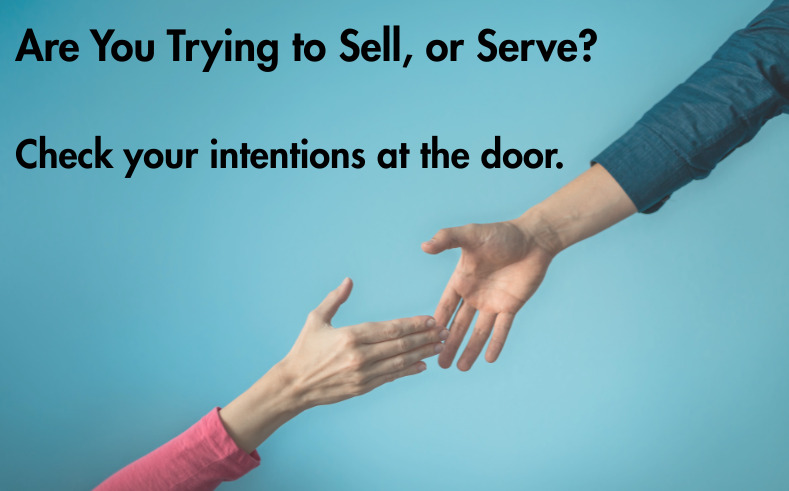
If I could offer one piece of sales advice, it would be this: Focus on serving over selling.
Think about the last time you made a significant purchase. Did you want someone trying to close you from the moment you walked through the door? Probably not.
When we sense that someone is more interested in making the sale than helping us make the right decision, our “spidey senses” start going off. We become skeptical. We put our guard up. Sometimes, we simply walk away.
I experienced this firsthand while shopping for a new vehicle.
Yes, I’m going to use the stereotypical car salesperson example.
I pulled onto a dealership lot, and before I could even get out of my vehicle, a salesperson was approaching me. Almost immediately, the conversation turned to what I wanted my monthly payment to be.
He was pushing before he understood what I needed.
And that’s the problem.
People don’t want to feel like a transaction. They want someone who will listen, answer their questions, understand what they are trying to accomplish, and help them make a good decision. Not move them to the next stage of the sales process.
A quote often attributed to Jeffrey Gitomer captures the idea well: “People don’t like to be sold, but they love to buy.”
Think about what happens when you walk into a store, and a salesperson immediately rushes toward you. Our natural tendency is often to pull away: I’m just looking. But after we’ve had time to browse, do our research, and develop questions, something changes.
Now we actually want someone to help us.
And I think that’s where the real difference lies.
Check Your Intentions
Before you walk into your next Discovery call, ask yourself:
“Am I here to sell something, or am I here to help someone?“
If your intention is genuinely to help the person sitting across from you, even if helping them means they don’t buy from you, you begin to approach the conversation differently.
You ask better questions. You listen more closely. You become curious about their challenges.
And sometimes, you tell them not to buy what you’re selling, which might sound counterintuitive, but those moments can create more trust than any sales pitch ever could.
I’ve experienced it personally.
The Lawn Company That Told Me Not to Buy
In the spring of 2025, we decided to invest more in our lawn. I was referred to a company with a great reputation and spoke with the owner about our grass, irrigation system, and what we hoped to accomplish. He could have easily sold me his services.
Instead, he told me not to hire him yet.
Why?
Our irrigation system wasn’t set up properly, and he explained that paying for his services then would essentially be a waste of money.
He came back in the fall, offered more advice, and helped make sure that when we did invest, we got the most from it.
He sacrificed a short-term sale to do what was right for me.
Guess what happened?
He earned my trust, and I’ve referred him multiple times since.
The Foundation Company That Calmed Our Fears
Another example came when we noticed cracks in our garage floor.
Naturally, we were concerned, so we contacted a company with excellent reviews. They could have easily played into our fears and convinced us we had a major problem that required an expensive solution.
They didn’t.
Instead, the person listened to our concerns, asked about our plans for the house, and explained that the cracks were primarily cosmetic and nothing to worry about. He did identify something we should address: moving water away from the house to prevent potentially larger problems down the road.
Once again, someone had the opportunity to sell us something we didn’t need.
Instead, he served us, and once again, that company became someone we trusted and turned to for other projects.
Serve First. Always.
So I’ll ask the question again:
When you meet with a prospective client, are you looking to sell, or are you looking to serve?
The difference may seem subtle, but your prospects can feel it.
They can tell when you’re listening because you genuinely want to understand, and when you’re simply waiting for your turn to pitch. They can tell when your recommendation is based on what’s best for them, and when it’s based on what’s best for your bottom line.
Serving doesn’t mean you shouldn’t sell. It doesn’t mean you shouldn’t have goals, ask for the business, or close deals. It means the sale is the result of helping someone, not the reason you’re helping them. Always be sure to:
- Put their needs ahead of your own.
- Be willing to recommend something that doesn’t benefit you financially.
- Tell someone when you’re not the right fit.
- Help them make the best decision, even when that decision isn’t you.
You may lose a sale today. But you can gain something far more valuable: trust.
And trust can lead to a customer, a referral, a recommendation, a friendship, or an opportunity you never could have predicted.
Walk in asking, “How can I help this person make the right decision?”
Then serve them well enough that, whether they buy from you or not, they’re glad they met you.
Serve first. Always.
If you want to go deeper into this mindset, I highly recommend The Go-Giver by Bob Burg and John David Mann. It’s a great reminder that some of the best business results come when we stop focusing so much on what we can get and start focusing on the value we can give.
Here are links to The Go-Giver: